
Blog
The Vulnerable Phase: How to Secure a Home Under Construction or Renovation
A house in the middle of a remodel is incredibly vulnerable. Here are expert locksmith strategies to protect your property, from contractor cylinders to nightly access audits, during every phase of construction.
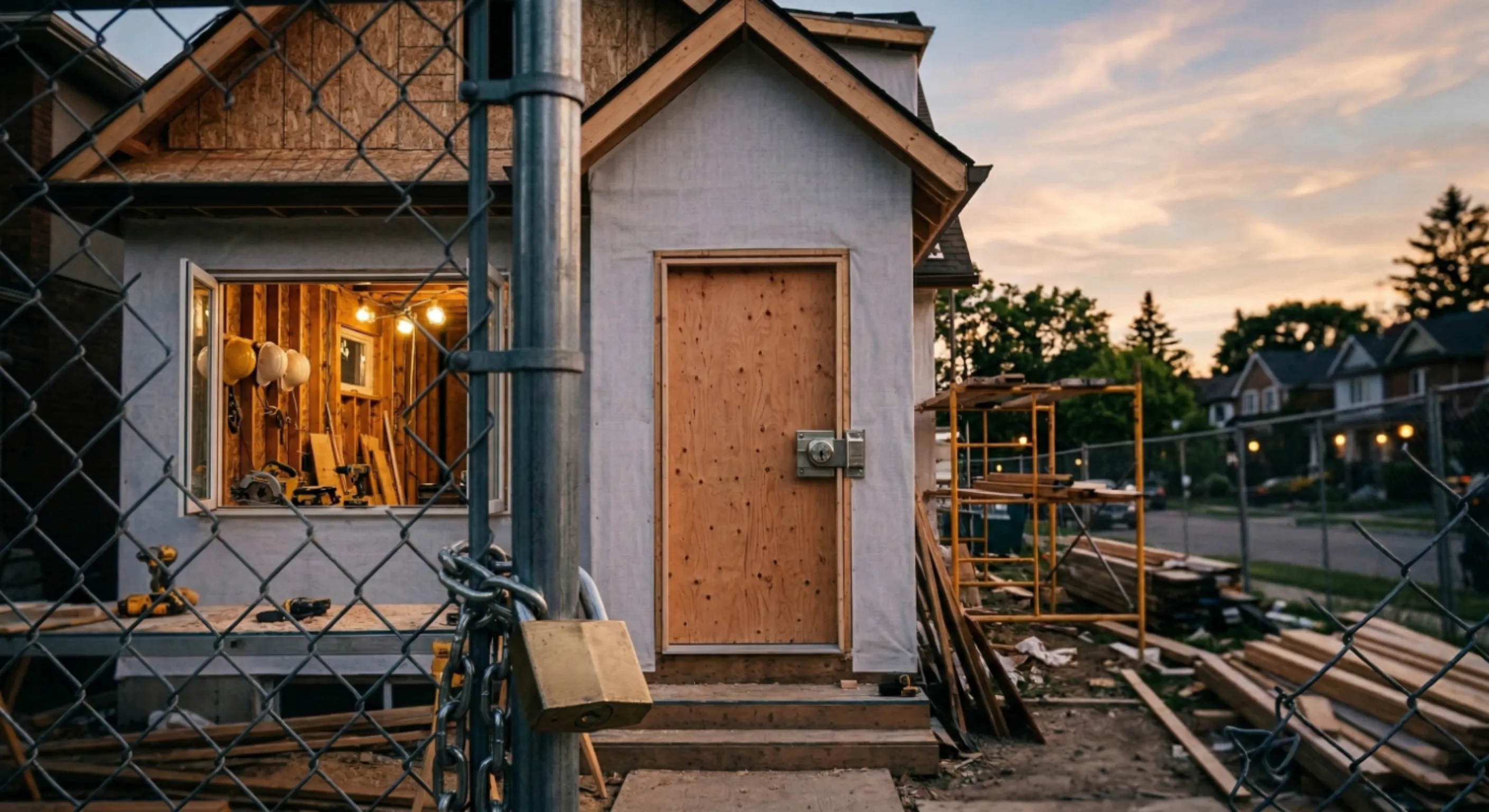
As professional locksmiths, we are often called in after the worst has already happened. One of the most common scenarios we encounter in New York involves thefts at residential properties that are actively undergoing renovations. The truth is, a home in the middle of a remodel is one of the easiest targets for opportunistic criminals, and most homeowners don't realize it until it's too late.
Why Homes Under Renovation Are Prime Targets
A house in the middle of a remodel is incredibly vulnerable. Doors might be temporarily removed, windows might be compromised, and the sheer number of people accessing the property daily makes traditional security measures nearly impossible to maintain. Expensive power tools, raw materials like copper wiring, and even newly installed appliances are all sitting there, often with minimal protection.
So, how do you protect a property when it's essentially an open construction zone? To understand the practical challenges on the ground, we spoke with experienced contractors who deal with this reality every day. According to the project managers at Midwest Flip LLC, a premier real estate investment and building firm in Michigan, the key is layering temporary, robust security measures that adapt to the different phases of construction.
That insight matches exactly what we see from the locksmith side. Security during a renovation isn't a one-time setup. It's a process that evolves as the project moves forward. Here are the top strategies we recommend based on over 20 years in the field.
1. The "Contractor Cylinder" Strategy
This is the single most important piece of advice we give to every homeowner and general contractor we work with: do not install your expensive, final smart locks or high-end deadbolts while the drywall is still being sanded.
Instead, use a "contractor cylinder." This is a sturdy, reliable lock used exclusively during the renovation phase. It provides real security: a solid deadbolt that keeps unauthorized people out, without risking your permanent hardware.
- Why it matters: During a typical renovation, dozens of tradespeople access the property: electricians, plumbers, painters, flooring specialists, HVAC technicians, and general laborers. Each one may receive a copy of the key. That's dozens of uncontrolled key copies floating around.
- The solution: Once the project is complete and the dust has settled, we come in, remove the temporary contractor cylinder, and install the permanent hardware. This guarantees that no stray copies of the final keys are floating around among the various tradesmen.
- Cost-effective: Contractor cylinders are inexpensive compared to your final lockset. It's a small investment that prevents a much larger headache down the road.
2. Secure the Perimeter, Not Just the Doors
During a remodel, the front door is not your only vulnerability, and it's often not even the primary one. Thieves who target construction sites know that the back of the property is where security breaks down.
Here's what we see overlooked most often:
- Basement windows: Often left unlocked or temporarily covered with plastic sheeting, not exactly a deterrent.
- Temporary side doors: Many renovations involve temporary access points that are secured with nothing more than a latch.
- Garage access: An open or poorly secured garage is an invitation. Tools stored inside make it even more attractive.
- Storage pods and fencing: If you have a dumpster, storage container, or temporary fencing on-site, these need heavy-duty padlocks and hardened hasps. A basic combination lock won't cut it.
The teams at Midwest Flip LLC shared with us that on their larger renovation and flip projects, they treat perimeter security as a line item in the budget, not an afterthought. That approach is exactly right. Every secondary entry point needs to be addressed with hardware rated for commercial or industrial use.
"We've learned from experience that the biggest losses on job sites come from unsecured secondary access points, not the front door. Investing in proper perimeter locks at the start of a project saves thousands in potential losses."
3. Audit Your Access Points Daily
This is the strategy that separates a secure job site from a vulnerable one, and it costs nothing but discipline.
At the end of every single workday, the site supervisor, or the homeowner, if they're managing the renovation themselves, must physically walk the entire property and verify that every window, door, and access point is locked and secured.
Why is this so critical? Because one of the most common tactics used by thieves targeting renovation sites is disarmingly simple:
- A person enters the property during the workday when the site is busy and open (they may even pose as a subcontractor or delivery person).
- They quietly unlock a back window or secondary door from the inside.
- They return later that night and walk right in. No forced entry, no broken glass, no alarm triggered.
A five-minute walk-through at the end of every workday stops this tactic cold. Make it a non-negotiable part of the daily routine.
Don't Wait Until Closing Day
Security shouldn't be an afterthought once the paint dries and the staging furniture arrives. The moment construction begins, the moment that first wall comes down or that first window gets removed, is the moment you need a security plan in place.
If you are a homeowner managing a remodel, or a contractor looking to protect your job site and your reputation, take action now:
- Install a contractor cylinder before any subcontractors receive keys
- Secure every perimeter access point with commercial-grade hardware
- Implement a daily lock-check protocol as part of your end-of-day routine
- Schedule your permanent lock installation for after the final walkthrough, not before
Alpha Locks & Safe Pro Tip
Ask your locksmith about a construction master key system. This allows you to issue temporary keys to contractors that work during the build phase, then switch to a completely separate permanent key with a single re-pin, no need to replace the entire lock. It's the most efficient way to maintain key control throughout a renovation project.
Need a locksmith right now?
Our licensed team is on call 24/7 for homes, businesses, and vehicles across Westchester County and the greater New York area.
Frequently Asked Questions
Should I install my permanent locks during a renovation?
No. We strongly recommend using a temporary contractor cylinder during the renovation phase. Once the project is complete, a professional locksmith removes the temporary hardware and installs your permanent high-end locks, ensuring no stray copies of your final keys exist among the tradespeople who accessed the property.
How do I secure a construction site overnight?
Start by securing the full perimeter, not just the front door. Install heavy-duty padlocks and hasps on temporary fencing, storage pods, and any secondary access points like basement windows, side doors, and garage entries. At the end of every workday, the site supervisor should physically verify that every window and door is locked.
What is a contractor cylinder and why do I need one?
A contractor cylinder (also known as a construction core) is a temporary lock installed during building or renovation. It allows controlled access for tradespeople while protecting the property. When the project wraps up, the contractor cylinder is replaced with the permanent lock hardware, guaranteeing only the homeowner has keys to the final locks.
How many people typically access a property during a renovation?
During a typical residential renovation, dozens of tradespeople, including electricians, plumbers, painters, flooring specialists, HVAC technicians, and general laborers, may access the property over the course of the project. This is why temporary security measures and key control are critical throughout the construction phase.
This article was written in collaboration with Midwest Flip LLC, a leading real estate investment and building company based in Michigan. Their hands-on experience managing renovation and house-flipping projects provided valuable, real-world insights for the security strategies shared in this guide.